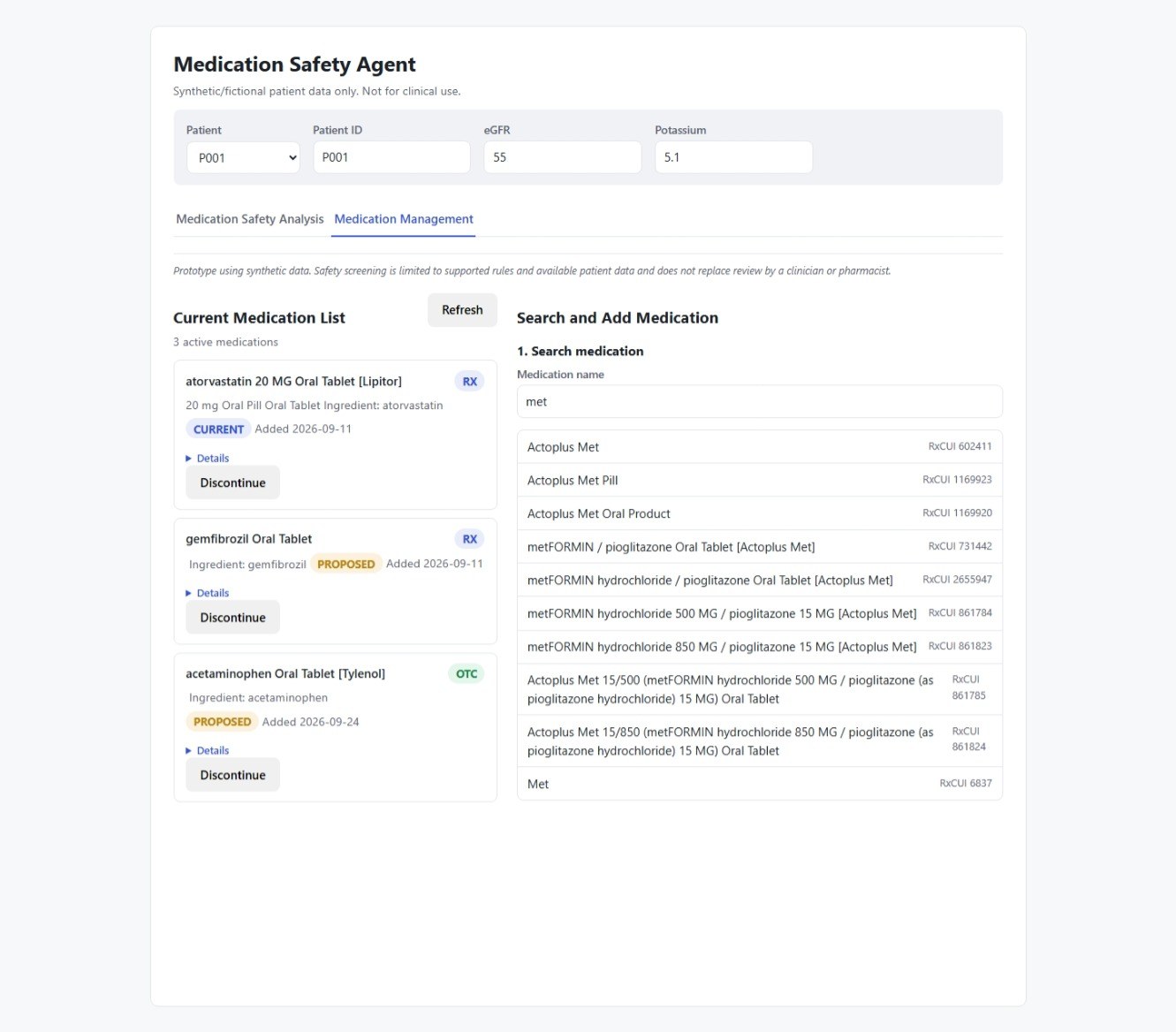
1. Medication lookup
Debounced RxNorm/RxTerms search lets the user select the intended medication while the active list remains visible.
02 / HEALTHCARE / APPLIED AI
Analyze medication and lab data, manage medication changes, and keep every safety explanation traceable to evidence.
Working prototype · safety analysis + medication management
View public GitHub repository →Overview
The application combines Medication Safety Analysis with Medication Management. The first evaluates deterministic drug-drug and drug-lab rules with evidence-linked findings and AI explanation. The second supports medication search, review, safety-check, add, and discontinue without losing the patient context.
A useful medication-safety tool needs more than a risk score. It needs medication lookup, clear evidence, pre-add review, explicit handling of proposed versus current medications, and controls that prevent stale or incomplete checks from being treated as current.
Defined and built the safety and medication-management workflows, organized rules and evidence in Databricks, integrated RxNorm/RxTerms lookup and live FDA-label fallback, and kept AI constrained to explaining findings rather than creating them.
Architecture
Medication CRUD/lookup is deterministic and uses Unity Catalog plus RxNorm/RxTerms. The clinical pre-add safety check reuses the same central safety endpoint as the main analysis.
Application walkthrough
The application makes the medication-management flow explicit and keeps the safety-analysis tab available against the same patient/lab context.
Debounced RxNorm/RxTerms search lets the user select the intended medication while the active list remains visible.
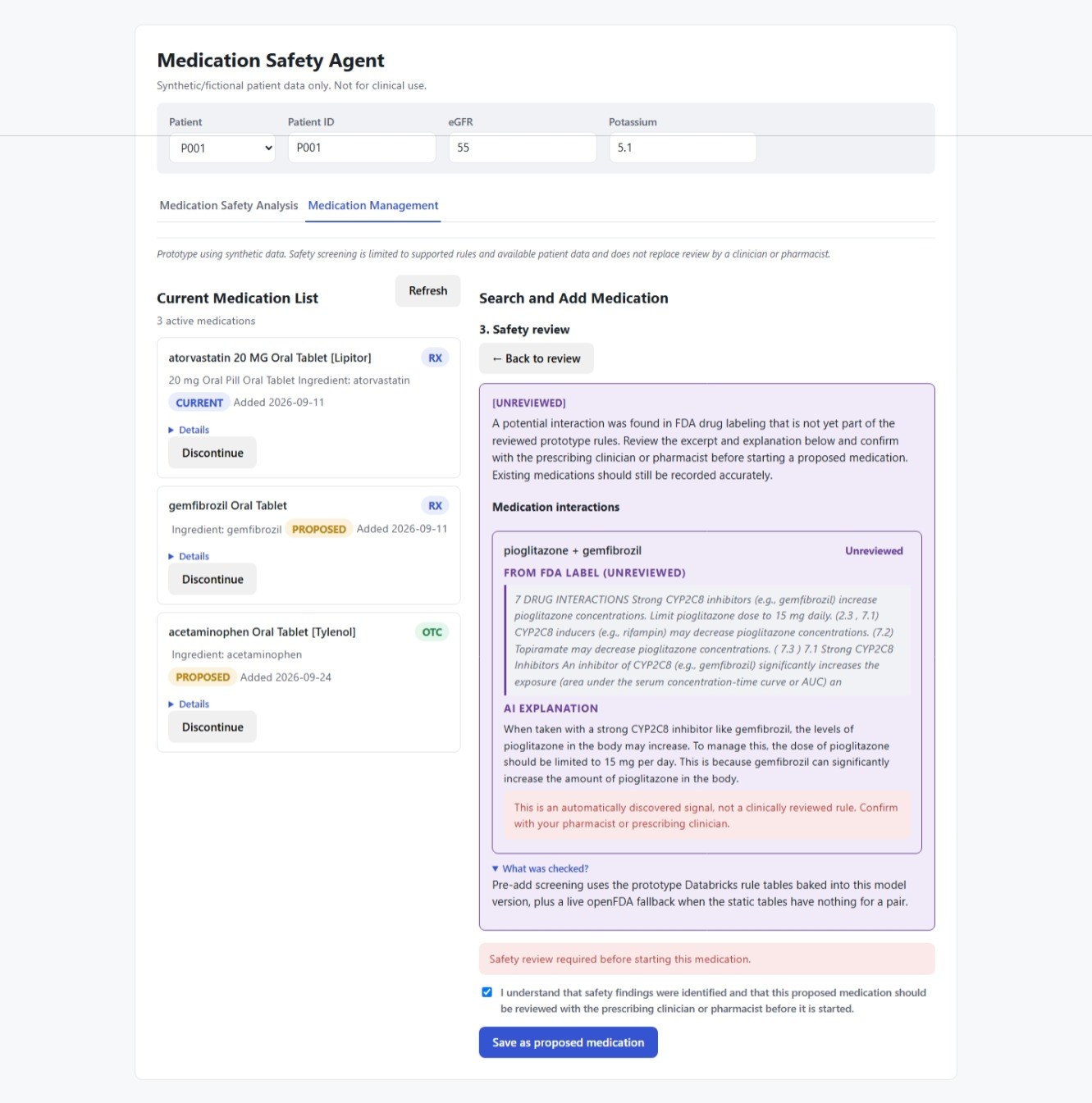
A proposed medication is screened before persistence. High, Moderate, or Unreviewed findings require an explicit acknowledgement before saving.
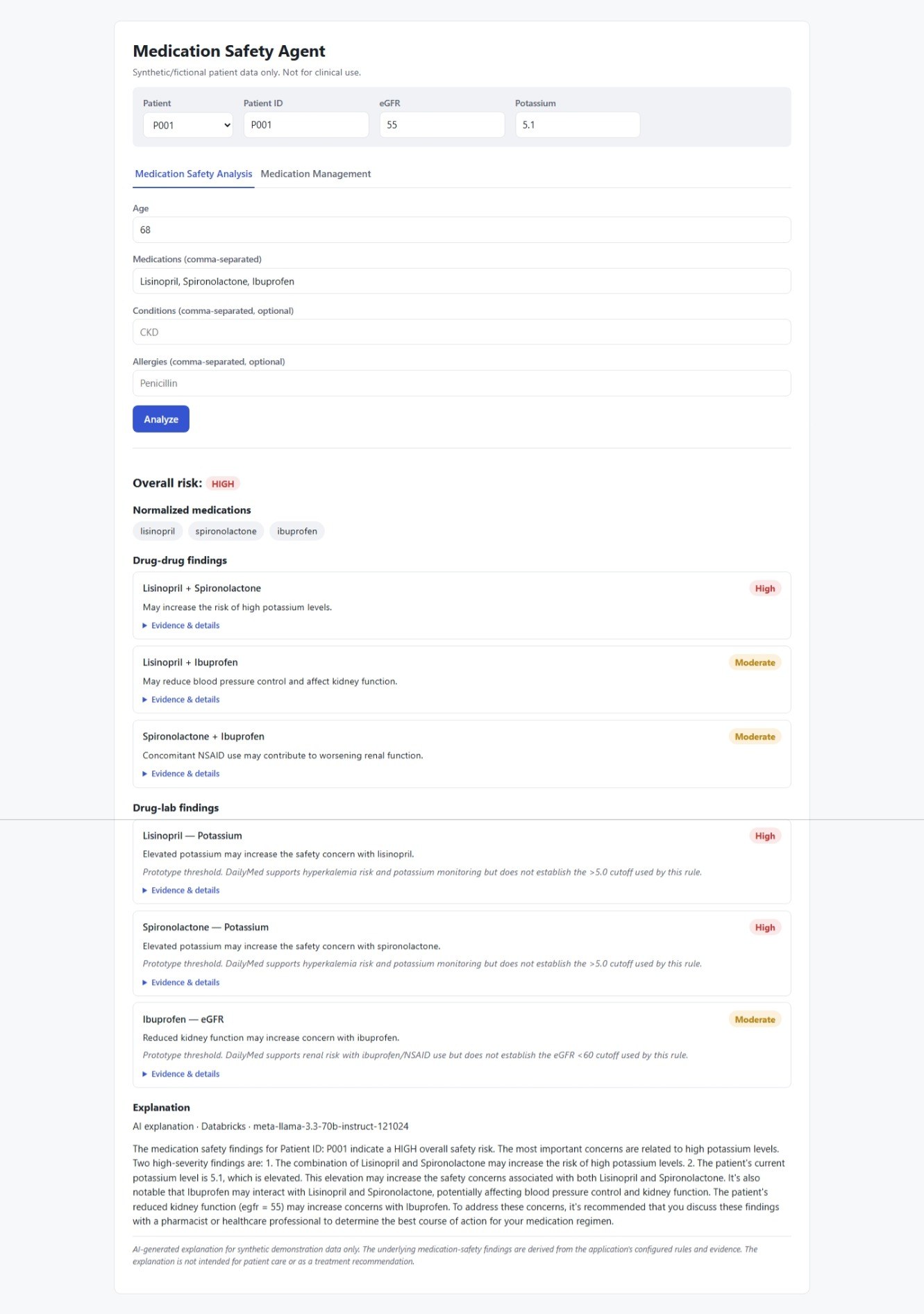
The analysis separates interaction findings from laboratory-context findings, shows severity/evidence, and follows them with a grounded explanation.
Workflow capabilities
For the synthetic P001 scenario shown in the application, the result is HIGH with 3 drug-drug findings and 3 drug-lab findings. This demonstrates both rule dimensions in one view while keeping the evidence and explanation traceable.
Engineering test coverage remains supporting evidence, not the product headline. Synthetic demonstration only; not intended for patient care.